


AAALAC International is committed to ensuring that our accreditation processes remain transparent, globally relevant, and clearly understood by the programs we serve.
As part of that commitment, we are updating how our accreditation standards are presented on our website and in related materials. Specifically, the designation of “Primary Standards” will be retired.
This update reflects the long-standing practices of the AAALAC Council on Accreditation when conducting accreditation evaluations. Council has always assessed programs using all applicable standards relevant to an institution’s activities, species, and geographic location. No single document is used in isolation. Rather, accreditation reflects a comprehensive, context-based review of the full standards portfolio appropriate to each program. The most rigorous standard, whether the Guide for the Care and Use of Laboratory Animals (Guide), local regulations, or an AAALAC Position Statement or Guidance Statement, is applied. This change becomes effective on August 1, 2026.
What this means for your program:
The Guide remains an important and widely referenced document within AAALAC’s standards framework, as it has been for decades. It continues to inform accreditation evaluations, alongside other applicable national, regional, species-specific, and professional standards. Likewise, the Guide for the Care and Use of Agricultural Animals in Research and Teaching (Ag Guide) and ETS 123 remain important resources for programs where they are applicable.
This update on categorization of AAALAC standards is intended solely to ensure that the way we describe our standards framework accurately reflects long-standing Council practice and the global scope of AAALAC accreditation.
We appreciate the trust that the global research and teaching community places in AAALAC. If you have questions about this clarification, we encourage you to contact us directly (accredit@aaalac.org, +1-301-696-9626).
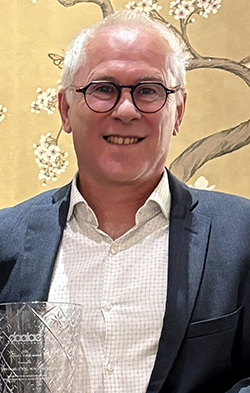 Dr. Thierry Decelle receives the Bennett J. Cohen Award
At its annual meeting of the Member Organization Delegates, AAALAC International presented its highest honor, the Bennett J. Cohen Award, to Dr. Thierry Decelle, DVM, MSc, DipVetLAS. The Bennett J. Cohen Award recognizes outstanding individuals who have provided exceptional service and significant contributions to AAALAC International and have demonstrated a strong and abiding commitment to advancing science through the promotion of the highest standards of laboratory animal care in research and education.
“I’m so pleased that Dr. Decelle’s long-standing service and dedication to AAALAC’s mission are being recognized with this prestigious award,” said AAALAC International CEO Dr. Gary Borkowski. “Dr. Decelle has been instrumental in AAALAC’s growth, particularly in Europe, and this recognition is well deserved.”
Dr. Decelle began his 20-year career with AAALAC International leading the effort to translate the Guide for the Care and Use of Laboratory Animals (Guide), one of AAALAC’s primary standards, into French. In 2005 he was appointed to the European Section of the Council on Accreditation where he served from 2005-2017. He then went on to serve as an Emeritus Council Member, continuing to assist with the site visits that determine AAALAC accreditation status. Dr. Decelle also served as a member organization representative for the European Society of Laboratory Animal Veterinarians (ESLAV) from 2017-2025. He was elected to the AAALAC International Board of Directors in 2018 where he served until 2024. One of this year’s award nominators noted, “Thierry has demonstrated an unwavering commitment to promoting the highest standards of laboratory animal care and welfare, especially for nonhuman primate species. His work on AAALAC’s Culture of Care Position Statement helped broaden standards to include the well-being of personnel alongside animal welfare. He has also played a key role in external advocacy for AAALAC accreditation, engaging regulatory authorities in France and Germany, and contributing his expertise to EU Commission working groups, as well as AAALAC and FELASA conferences.”
“Joining AAALAC International has been one of the most rewarding experiences of my career. Beyond standards and accreditation, AAALAC represents a unique international community committed to scientific excellence, collaboration, and respect for animals and people.” said Dr. Decelle.
Dr. Decelle currently serves as Founder and CEO of DCL Solutions, an international consultancy company supporting organizational development for better animal care and use and alternatives. Over the course of his career, he also served as Chief Veterinary Officer for Sanofi Group, and as Senior Director for Global Head of Operations, Research and Nonclinical Safety and as Head of the Research Department ‘Enabling Sciences and Biologics Design’ for Sanofi Pasteur R&D. Dr. Decelle holds a National Veterinary Specialization (D.E.S.V.) in Laboratory Animal Science & Medicine and a National Diploma in Toxicology (D.E.A.) He has also held leadership positions and made significant contributions to multiple European and French laboratory animal science organizations, including FELASA, AFSTAL, GIRCOR, ESLAV, EFPIA, EARA as well as U.S.-based organizations such as IOC and IQ Consortium, and is the co-founder of the European Primate Veterinarians (EPV).
Please join us in congratulating Dr. Decelle!
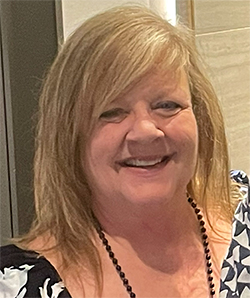 Sandy L. Dexter receives The AAALAC International James R. Swearengen Award
At its annual meeting of the Member Organization Delegates, AAALAC awarded Sandy L. Dexter, B.S., LATG, AAALAC's Assistant Director, The James R. Swearengen Award.
Named in honor of the late James R. Swearengen, the award recognizes outstanding individuals who have, through their exceptional service and significant contributions to the Council on Accreditation for AAALAC International, demonstrated a strong and abiding commitment to advancing science through promotion of the highest standards of laboratory animal care in research, testing, and education by creating an environment of respectful focus on continuous improvement. Dr. Swearengen was instrumental in the promotion of the international expansion of the mission of AAALAC International. A confident, quiet-mannered friend to all, quick with a smile and warmly engaging to everyone, he was one of AAALAC’s greatest ambassadors. A beloved mentor, he patiently listened to all perspectives, while remaining firm in his convictions. Dr. Swearengen was steadfast in his dedication to promoting animal welfare and the impact of the mission of AAALAC International.
“When you think of staff at AAALAC, you always think of Mrs. Sandy Dexter. Since 1996 she has devoted her career to AAALAC International,” said Dr. Gary Borkowski, CEO. “During her 30 years with AAALAC, Sandy has been the constant for Council and is known and respected by all. Her ability to multi-task with incredible rigor and precision is truly amazing. Sandy’s historical knowledge about AAALAC is also truly remarkable. Additionally, her willingness and ability to provide ideas and input on any and all topics is unmatched. The Council on Accreditation, staff and the entire AAALAC family expresses their heartfelt gratitude for all of Sandy’s efforts on their behalf over these many years.”
On the strengths of the nominations received, please join us in congratulating Mrs. Sandy L. Dexter the 2026 recipient of the James R. Swearengen Award!
.jpg)
At its annual meeting of the Member Organization Delegates, AAALAC International presented Dr. John A. Bryan II, Dr. Mark P. Reilly, and Mr. Yi Quan “Shawn” Tay with the 2026 Outstanding Delegate Service Award.
The Outstanding Delegate Service Award recognizes individuals who have made long-standing and impactful contributions to AAALAC International through dedicated service as a Member Organization Delegate. Their contributions have promoted AAALAC’s accreditation mission and demonstrated a strong and abiding commitment to advocating high-quality research animal welfare.
On the strengths of the nominations received, please join us in congratulating Dr. John A. Bryan II, Dr. Mark P. Reilly, and Mr. Yi Quan “Shawn” Tay as the 2026 Outstanding Delegate Service Award recipients!
 Dr. Jacob R. Werner promoted to Senior Director – Education & Outreach
AAALAC International has promoted Jacob (Jake) R. Werner, V.M.D., to the position of Senior Director – Education & Outreach. Dr. Werner has been serving as AAALAC's Director-United States of America (USA). In recognition of the ongoing need for expanded continuing education for AAALAC volunteers and accredited units he has been elevated to the Senior Director position.
In this role, Dr. Werner will support the accreditation program through the development of continuing education materials and presentations for the Council and other volunteers. He will also continue his work supporting the development of educational materials for accredited units and other interested parties. These efforts will support the harmonization of the expectations of the multinational accreditation program.
Please join us in congratulating Dr. Werner!
 AAALAC International has appointed Cecile Baccanale, D.V.M., as its new Senior Director for North America. In this position, Dr. Baccanale will lead and oversee the Association’s accreditation activities in North America, including managing all site visits in the Americas and providing education and outreach activities for North American conferences and meetings. Dr. Baccanale will assume her duties later this fall.
“AAALAC has always been an essential part of my career. I’m very honored to be joining AAALAC on a full-time basis and look forward to this new chapter in my career,” said Dr. Baccanale. “I have watched the tremendous growth of AAALAC over the last 20 years—I feel very privileged to join it as it continues to expand and promote excellence in animal care worldwide.”
Dr. Baccanale has over 30 years of experience in leadership roles within laboratory animal medicine, spanning academic, government, and industry settings. Most recently, she served as the University Veterinarian and Associate Vice President, Animal Care, in the Office of the Vice President (Research and Innovation) at McGill University in Montreal, Canada. In this senior leadership role, Dr. Baccanale was responsible for animal care and use across the university campuses, including animal care operations, veterinary and technical services, and the animal compliance office. She was also responsible for securing funding to improve infrastructure and increase staffing across animal care operations and the compliance office and represented senior leadership on the University's Animal Care Committees.
“We are very pleased to welcome Dr. Baccanale as Senior Director for North America. Her depth of experience and knowledge of AAALAC’s accreditation program and processes will enable her to be of tremendous service to our accredited programs in North America,” said Dr. Gary Borkowski, CEO of AAALAC International.
For 12 years, Dr. Baccanale served as a member of AAALAC’s Council on Accreditation, followed by eight years of service as a Council Member Emeritus, leading site visits to determine which institutions are awarded AAALAC accreditation. She served as a Council Officer for five years, including three years as a Section Leader. Additionally, Dr. Baccanale has served in leadership roles at U.S. universities, including Associate Director at Cornell University and Director of the Office of Animal Care Services, and Attending Veterinarian at the University of Connecticut. Her industry and governmental experience includes serving as Director of Animal Health at Marshall BioResources, and as a co-investigator and veterinarian at Health Canada. Dr. Baccanale also has extensive regulatory experience as an Assessment Director for the Canadian Council on Animal Care.
Dr. Baccanale has taught and lectured at institutions including McGill University, University of Connecticut, Cornell University, and East Carolina University. She received a full scholarship to Marianopolis College, where she earned a Diplôme d'études collégiales in Health Sciences, and later received a D.V.M. from the Université de Montréal in Montreal. Dr. Baccanale is an active member of l’Ordre des médecins vétérinaires du Québec (OMVQ), Canadian Association of Laboratory Animal Medicine (CALAM), American Veterinary Medical Association (AVMA), American Association for Laboratory Animal Science (AALAS), and the National Center for Faculty Development & Diversity (NCFDD).
Please join us in welcoming Dr. Baccanale!
For more than 50 years, AAALAC International has promoted the humane and responsible care and use of animals needed to advance medical and scientific discoveries that save lives and improve the health and well-being of both people and animals. By accrediting participating institutions, including research animal breeders, AAALAC International fosters humane and responsible animal care and use policies and practices that meet or exceed applicable standards.
Reflective of international interest, AAALAC International receives questions regarding its approach to accrediting nonhuman primate breeding programs around the globe. The following describes the standards and resources used in the rigorous evaluation of these programs conducted by AAALAC International representatives.
For a description of the accreditation process, including the on-site assessment, see “Preparing for an AAALAC International Site Visit” (AAALAC Presentations - AAALAC).
AAALAC International strongly affirms that high quality science is achieved when the welfare of the research animals is also maintained at a high level that reflects the 3Rs and a Culture of Care.
For more than 50 years, AAALAC International has promoted the humane and responsible care and use of animals needed to advance medical and scientific discoveries that save lives and improve the health and well-being of both people and animals. By accrediting participating institutions, we strive for humane and responsible animal care and use policies and practices that meet or exceed our standards.
AAALAC International’s Rules of Accreditation stipulate that the accredited institution shall observe any and all statutes and governmental regulations which bear upon animal care and use. Our accreditation standards further require institutions to promptly notify AAALAC International of significant adverse events relating to their animal care and use program. Examples include internal or external reviews/inspections that document these events; investigations by national oversight bodies; and other serious incidents or concerns that negatively impacted animal well-being.
Institutions that do not follow AAALAC International’s Rules of Accreditation are subject to their accreditation being revoked.
As part of the development of a new strategic plan, the AAALAC International Board of Directors has adopted updated Mission and Vision Statements that will guide the organization in the months and years ahead. The Mission and Vision are as follows:
Mission Statement
AAALAC International improves the welfare of animals in science and education through the accreditation of organizations meeting high standards of humane and responsible animal care and use.
Vision Statement
A world where excellence in animal welfare and science converge.
“We are convinced these Mission and Vision Statements fully capture AAALAC International’s commitment to animal welfare in science worldwide. The new strategic plan provides a path that builds on the organization’s strengths and successes and charts a course for expansion and even greater impact,” said Dr. Joachim Coenen, AAALAC International Board Chair.
Established in 1965, AAALAC International is a private, nonprofit organization that operates voluntary evaluation and accreditation programs. Institutions seeking accreditation receive an independent, expert assessment of their animal care and use program. Those that meet or exceed applicable standards are awarded accreditation.
“AAALAC International has a long and impressive history of working with the research and animal care communities to improve animal welfare in science and education through participation in the accreditation program,” said Dr. Kathryn Bayne, AAALAC International Chief Executive Officer. “Thanks to our worldwide network of dedicated staff and volunteers we look forward to implementing this new strategic plan that will expand the scope and influence of AAALAC’s work, further benefiting animals and the resulting research.”
Currently more than 1,050 companies, universities, hospitals, government agencies and other research institutions in 50 countries/regions have earned AAALAC accreditation, demonstrating their commitment to responsible animal welfare in science. More information is available on AAALAC's Web site at www.aaalac.org.
For more than 50 years, AAALAC International has promoted the humane and responsible care and use of animals needed to advance medical and other scientific discoveries that save lives and improve the health and well-being of both people and animals. By accrediting participating institutions, we foster responsible, humane and high quality animal care and use based on policies and practices that meet or exceed our standards.
AAALAC takes very seriously any possible deficiencies by accredited institutions that fall short of our standards that we identify via site visits, are self-reported or we become aware of via other means. We launch an investigation and establish a timetable for corrective action. In such cases, an institution is placed on restricted accreditation status (e.g., deferred accreditation or probation). Failure to report reportable adverse events promptly, as mandated by AAALAC’s Rules of Accreditation, may lead to the revocation of the AAALAC International accreditation.
To confirm suitable corrective action has been implemented, our Council on Accreditation may conduct drop-in visits with limited advance notification or a comprehensive mandatory site revisit. Failure to correct deficiencies can and has resulted in revocation of AAALAC International accreditation.
To receive AAALAC International accreditation, an institution must submit a detailed program description that details all aspects of its animal care and use. Once the program description is reviewed, AAALAC International conducts a comprehensive, onsite assessment of the program and facilities to determine if the institution will be awarded accreditation.
AAALAC requires accredited institutions to promptly report adverse events, including unexpected animal deaths and allegations regarding compromised animal welfare. We investigate these reports and, if deemed appropriate, require corrective action within a set period of time. As noted above failure to correct deficiencies in these situations can also result in revocation of AAALAC accreditation.
Additional questions about AAALAC's accreditation process may be directed to accredit@aaalac.org.